





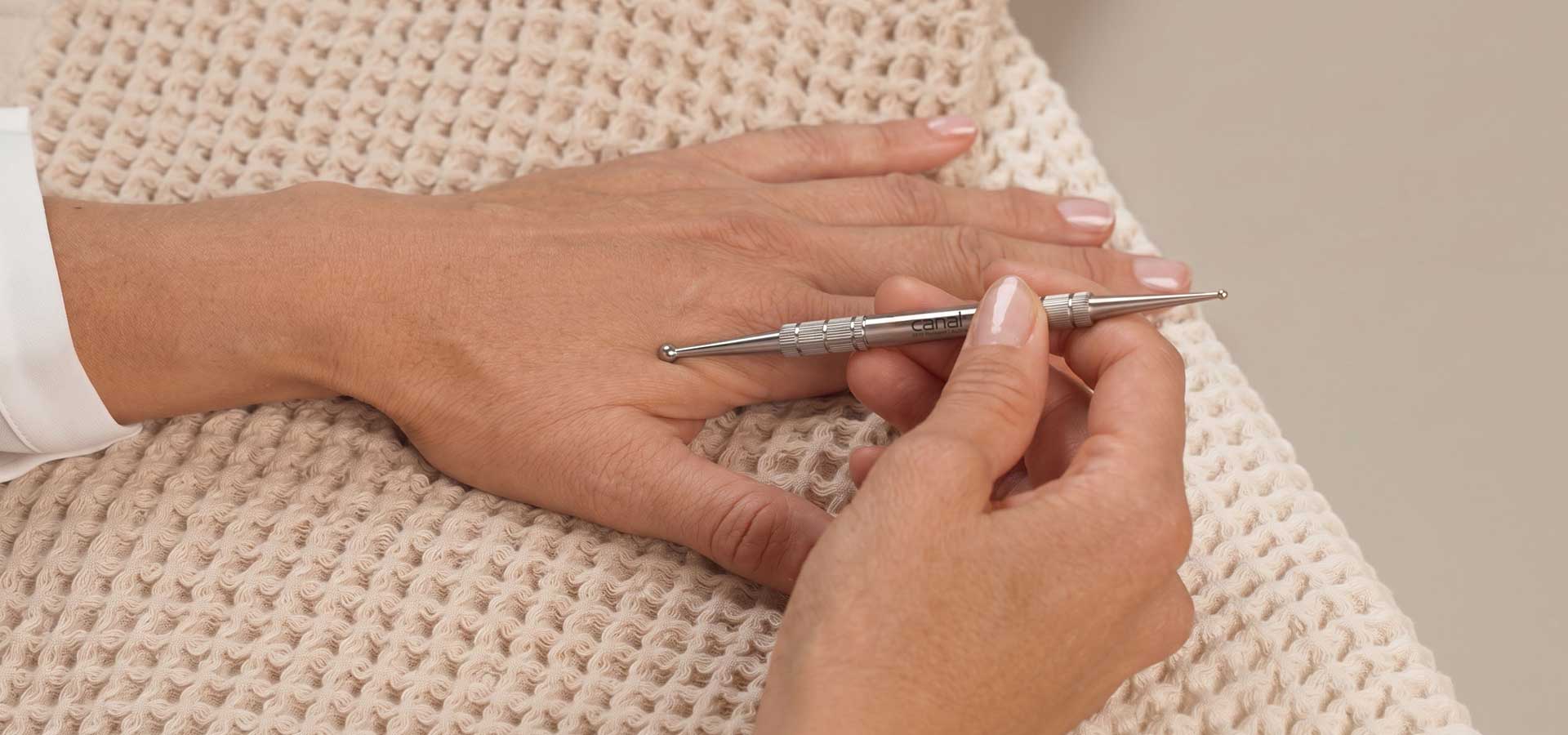
Acupressure Points: How to Apply Acupressure Correctly & Boost Your Well-being
Acupressure is a proven, natural method for alleviating complaints and promoting general well-being. It is based on the principles of Traditional Chinese Medicine (TCM) and uses the stimulation of specific points on the body to regulate energy flows and initiate healing processes. In this comprehensive article, you will learn everything you need to know about acupressure: how it works, which complaints it helps with, and how you can apply it at home.
FREE SHIPPING
Coupon code: VFREI-7
Acupressure Explained: How it Works and Why it Helps
Acupressure is a healing method based on the same principles as the more well-known acupuncture. However, it uses no needles, but rather gentle pressure, a light massage, to stimulate specific points on the body. These so-called acupressure points lie along the meridians, invisible energy pathways through which, according to TCM, our life energy, Qi, flows. If the energy flow is blocked, discomfort and illnesses can arise. By applying targeted pressure to these points, the energy flow in the pathways is intended to be harmonized again and the self-healing powers activated. This treatment is thus intended to have a positive effect on health.
What is acupuncture?
Acupuncture is a traditional healing method from Chinese medicine, in which fine needles are inserted into specific points on the body. These points are located along the meridians, through which Qi, the life energy, flows. By needling, acupuncture rebalances the flow of energy and releases blockages to activate the body's self-healing powers. Unlike acupressure, which works by applying gentle pressure to these points, acupuncture uses needles for deeper stimulation. Both methods, however, are based on the same principles of energy harmonization and aim to alleviate ailments and promote healing.
Relieving complaints and promoting health: What problems can be treated with acupressure?
Acupressure can relieve a variety of health complaints. Whether you suffer from headaches, nausea, or emotional stress – there are specific points that can help alleviate your symptoms.
Acupressure at Home:
Get our free PDF "Acupressure for Home Use" for self-treatment.
To facilitate the application of acupressure, we offer a free guide for self-treatment. The short guide contains concise instructions for the most important acupressure points and explains how to stimulate them correctly.
Acupressure for Nausea and Dizziness
Nausea, whether due to pregnancy, motion sickness, or stomach upset, can be extremely distressing. Acupressure offers a gentle method for relief.
Acupressure for Nausea in Pregnancy
Many pregnant women suffer from morning sickness, especially in the first few months. Acupressure can help relieve these symptoms without the need for medication. The Pericardium 6 (P6) point, located about three finger-widths below the wrist, is known to relieve nausea. You can gently press this point for a few minutes to reduce symptoms.
Gentle Pressure: Relieve Pain with Acupressure
Acupressure can be effective for many types of pain by releasing tension and restoring energy flow.
Here are some specific types of pain for which it is particularly effective:
Menstrual pain
Many women suffer from severe pain during their menstruation. The spleen point 6 (SP6), located on the inside of the leg, about four finger-widths above the ankle, is an important point for relieving menstrual discomfort.
Back pain
Back pain is one of the most common complaints people have today. Bladder Point 40 (BL40), located in the back of the knee, can provide relief for back pain. Gentle pressure on this point can release tension in the lower back.
Neck pain
For neck pain, fever, colds, and headaches, the point Gallbladder 20 (GB20), located at the base of the skull, about two finger widths from the spine, can bring relief.
Headache
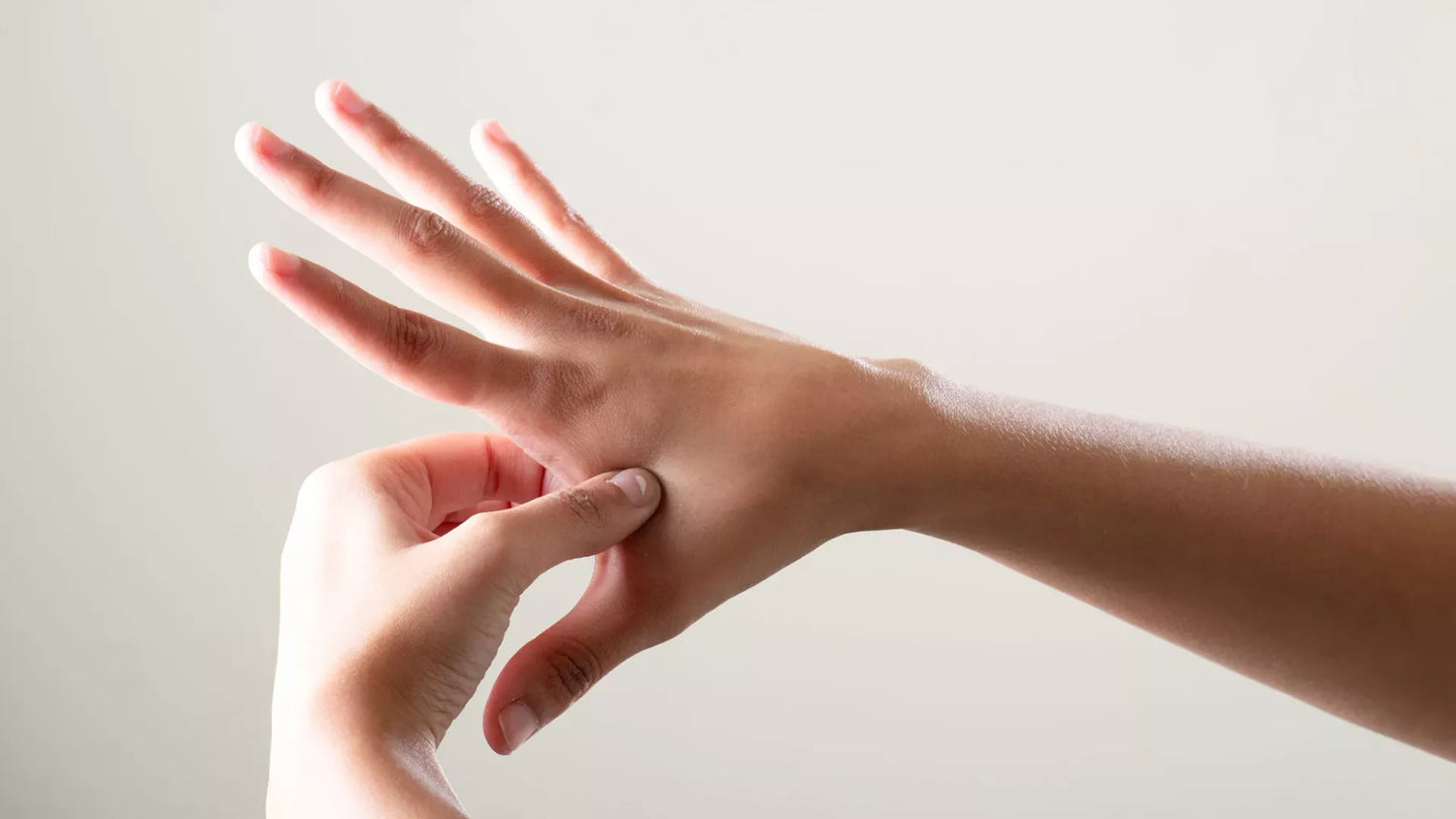
Acupressure can be an effective alternative to painkillers for headaches. The Large Intestine 4 (LI4) point, located between the thumb and index finger, can relieve tension headaches. For headaches at the back of the head or crown, treatment of the Bladder 10 (BL10) point is helpful. This point is located at the back of the head at the hairline.
Toothache
Acupressure can also help with toothache. The point Stomach 6 (ST6), located in the area of the temporomandibular joint, can provide relief through light pressure
Regular price
€ 13,90
Sale price
Regular price
Tax included.
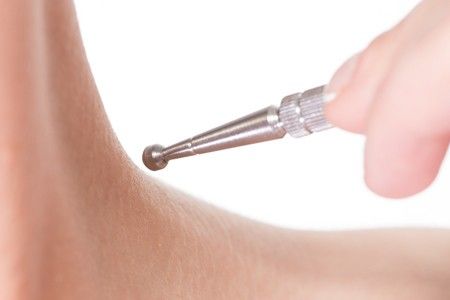
Acupressure pen for targeted pressure point massage
For applying acupressure – supports well-being through targeted stimulation of energy points.
Your advantages at a glance:
For massage & acupressure
Precise application
Durable & hygienic
Product details
Material: stainless steel
Dimensions: 13 x 0.7 x 0.7 cm
For applying acupressure – supports well-being through targeted stimulation of energy points.
Your advantages at a glance:
For massage & acupressure
Precise application
Durable & hygienic
Product details
Material: stainless steel
Dimensions: 13 x 0.7 x 0.7 cm
In stock
Important Acupressure Points Everyone Should Know
There are some acupressure points that are useful for a variety of ailments. You should definitely know these so that you can use them when needed.
Acupressure points on the ear: How they help with various ailments
The ear is a particularly sensitive area that has many reflex zones. The Shen Men point is located on the ear, specifically in the upper part of the inner auricle, near the so-called "triangular fossa". This point is often used to relieve stress, anxiety, and sleep disorders, as it has a calming effect on the nervous system.
Acupressure points on the feet: Foot reflex zones and their effects
The foot reflex zones are closely connected to the organs and various body systems. Kidney 1 (KI1), for example, which is located on the sole of the foot, is known for grounding the body and calming the nervous system.
Acupressure at home: How to perform self-treatment correctly
Acupressure can be easily performed at home. All you need is some time and patience. For more precise application, you can also use special acupressure pens to stimulate the points specifically. It is important that you apply gentle pressure to the corresponding points and do this for a few minutes.
Acupressure offers a gentle and effective method to relieve many health complaints. It is easy to use, requires no expensive aids, and can promote both physical and emotional well-being. Try it out and discover how acupressure can improve your life!
Frequently Asked Questions about Acupressure
How long should you press an acupressure point?
How long should you press an acupressure point?
An acupressure point should be stimulated for about 1-3 minutes with gentle, even pressure.
How do you perform acupressure correctly? What's the right technique?
How do you perform acupressure correctly? What's the right technique?
The massage is performed by applying gentle but firm pressure to specific points of the body, with the pressure being applied in a circular motion (in the more comfortable direction) or constantly.
What can acupressure do?
What can acupressure do?
It can relieve pain, release tension, calm the nervous system, and promote general well-being.
Can acupressure be used as a standalone therapy for pain?
Can acupressure be used as a standalone therapy for pain?
If it is applied improperly, for example by pressing too hard or rubbing in the wrong direction, this can, in the worst case, lead to a worsening of the symptoms or even minor injuries. To promote circulation and achieve positive effects, the pressure should always be controlled and gentle, without applying too much force.
What happens if acupressure is done incorrectly?
What happens if acupressure is done incorrectly?
It is recommended not to use acupressure as a sole therapy, but to integrate it as a complementary method in consultation with a doctor or expert. This can enable a holistic
treatment, where the patient can benefit from the combination of conventional and alternative medicine.