


Treating an Ingrown Toenail: Causes, Symptoms & Home Remedies Explained
Pain-free and healthy nail care
Ingrown toenails can be very painful. They are often caused by improper trimming, shoes that are too tight, or overly dry cuticles. The nail bed becomes inflamed, the skin swells, and every step becomes agony. However, with proper care, patience, and high-quality instruments, the problem can be managed well – entirely without aggressive treatments.
Why Ingrown Nails Occur – Causes and First Signs
An ingrown nail occurs when the side edge of the nail digs into the surrounding skin. The most common reasons are:
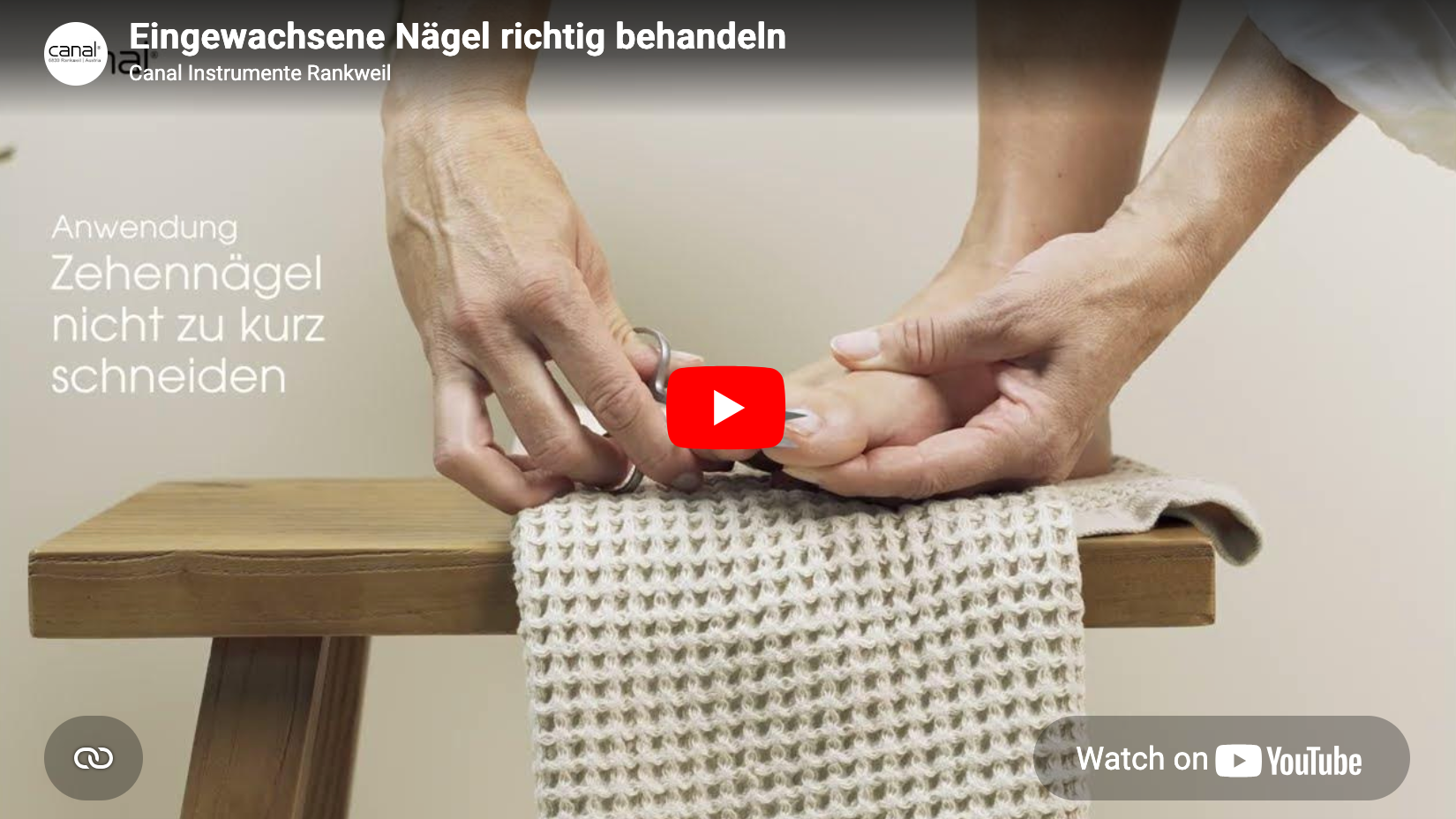
- Nails cut too short or rounded
-
Tight or pointed shoes that put pressure on the toes
-
Dry, hardened cuticles that push the nail edge inwards
-
Injuries or incorrect filing technique
Initial symptoms include redness, tenderness, and swelling. If you react correctly at this stage, a painful inflammation can often be avoided.
How you can treat ingrown nails with canalization:
Corner lifter - for clean nail edges
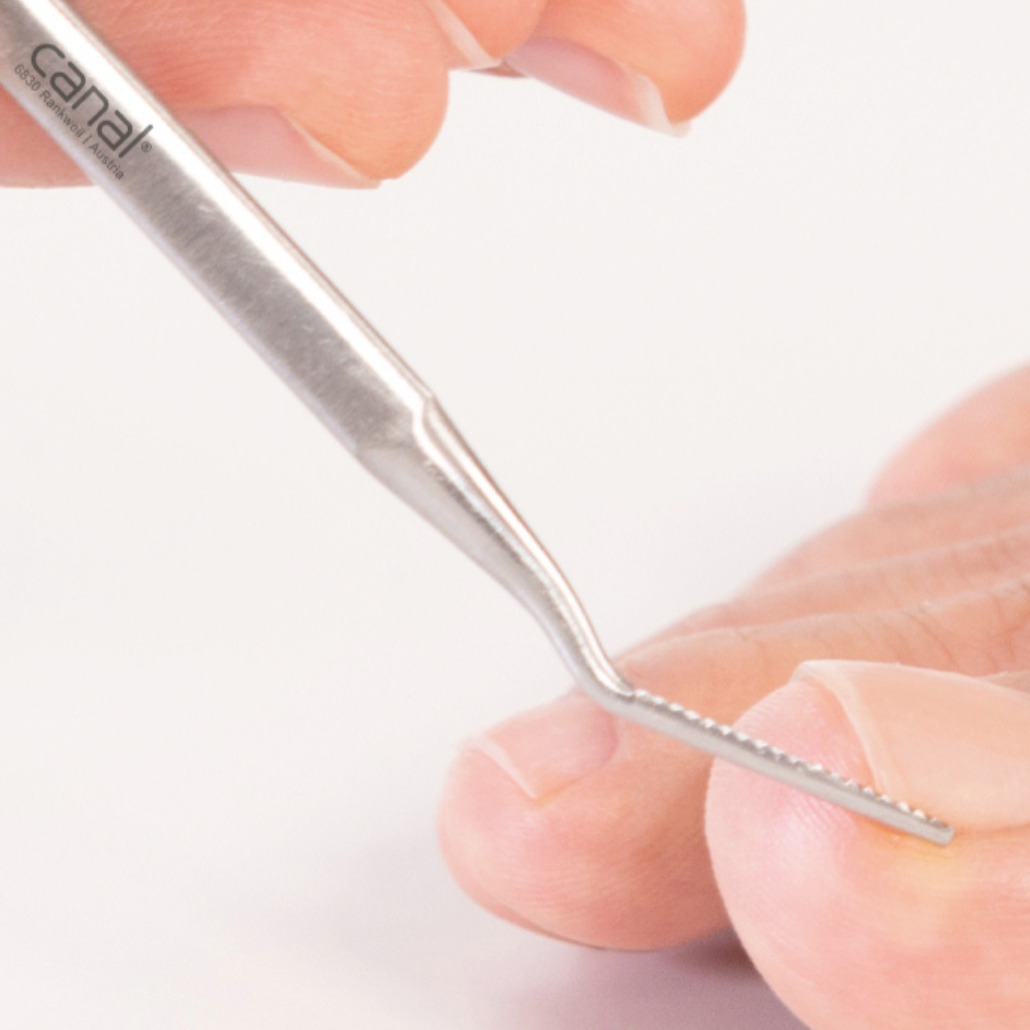
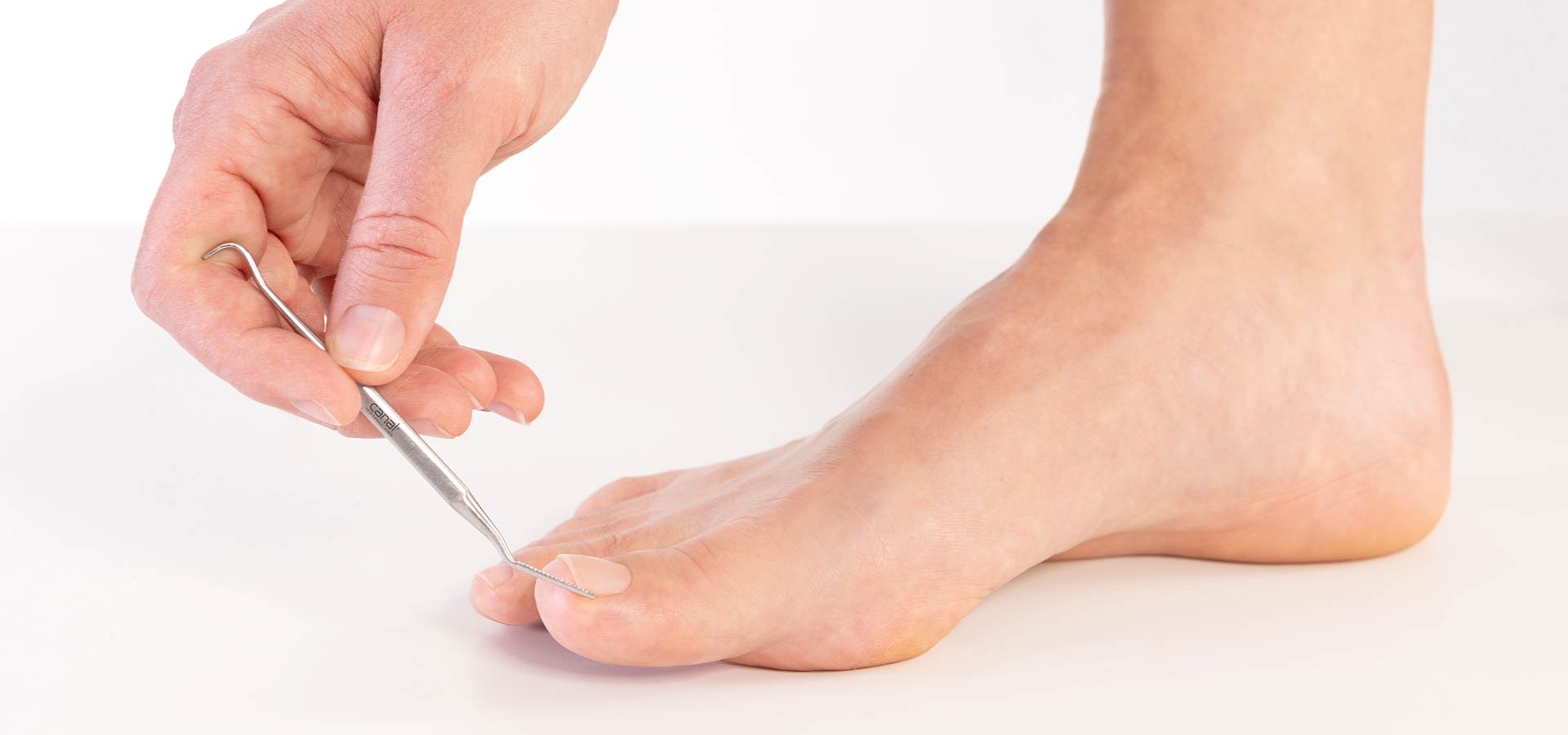
Our toenail cleaner made of stainless steel is the ideal tool for gently removing deposits under and next to the nail. Ingrown nails are completely exposed – for thorough, hygienic care. Available in two sizes.

Corner nippers – for precise work under the nail bed
The straight tip of our corner nippers effortlessly reaches under the nail bed. This allows ingrown nails to be precisely worked out and trimmed at the sides – gently and effectively. Available in three different sizes, perfect for every hand and application.

Corner file – gentle help for ingrown nails
The corner file was specially developed to gently treat painful nail corners. Thanks to its fine, curved shape, it easily reaches under the nail bed without injuring the skin. With the integrated hook, you can effortlessly loosen and remove deposits.
Post-care – how to keep your nail healthy
After treatment, proper aftercare is crucial:
-
Gently disinfect the treated area.
- Apply a nourishing, antiseptic cream to prevent inflammation.
-
Open or comfortable shoes avoid pressure on the nail.
- Let the nail grow out straight; do not cut it too short.
- Keep the skin around the nail supple – e.g., with a light nail oil or foot cream.
How to prevent ingrown toenails in the long term
Anyone who has suffered from an ingrown toenail knows: Prevention is the best care.
- Always cut nails straight, not too rounded.
- Wear suitable shoes with enough room in the toe area.
-
Regular foot care prevents calluses and pressure points.
- Use disinfected instruments and clean your files regularly.
Conclusion
With the right technique, high-quality stainless steel instruments, and a little patience, ingrown nails can be treated and prevented effectively at home. Our instruments offer precision, hygiene, and durability – for well-groomed feet, healthy nails, and an all-around good feeling.
Frequently Asked Questions About Ingrown Toenails
How do you recognize an ingrown nail?
How do you recognize an ingrown nail?
Typical symptoms include pain upon pressure at the nail edge, redness/swelling, and a sensitive, irritated skin fold.
How to properly treat ingrown toenails at home?
How to properly treat ingrown toenails at home?
Soft foot bath, expose the nail edge with an ingrown nail lifter, smooth the edges with an ingrown nail file and trim the tip straight with an ingrown nail nipper – without rounding off the corners.
Which instruments are particularly suitable?
Which instruments are particularly suitable?
Nail lifter / Nail cleaner: loosens deposits under the nail edge.
Corner file: smooths sharp edges in the nail fold.
Corner nippers: precise, straight shortening without splintering.
How do I prevent ingrown toenails?
How do I prevent ingrown toenails?
Trim nails straight, smooth edges, ensure sufficient toe room in shoes,
avoid irritating skin folds and gently care for them regularly.
When should one see a doctor or a medical pedicurist?
When should one see a doctor or a medical pedicurist?
In cases of severe pain, pus, recurrent inflammation, or underlying diseases (e.g., diabetes), please seek professional medical advice.